
Get the highest price for your coins without leaving home.
The Winged Liberty Head dime (nicknamed for the Roman god Mercury) ran from 1916 to 1945, and small details such as grade, mint mark, and Full Split Bands can turn a simple dime into a standout coin.
Each Mercury dime contains about 0.072 troy ounces of silver, and common circulated pieces often trade near their silver melt value.
However, key date coins such as the 1916‑D and the 1942/1 overdate have sold for many thousands of dollars. Some exceptional examples have reached over $200,000.
Knowing where to sell and how to check value makes all the difference.
This guide explains where to sell Mercury dimes, how much Mercury dimes sell for, how to spot key date Mercury dimes, and how to secure top-of-market pricing with a fast, transparent process from home.
When you’re ready to sell Mercury dimes, we’re here to help. The first step is to get a professional appraisal for your collection. For a fast appraisal from the comfort of your home, try Coinfully’s free online coin appraisal.
As always, feel free to contact us with any questions or if you need expert guidance for selling coins.
Table of Contents
Mercury Dimes at a Glance: Design, Silver Content, and Melt Value
What Is a Mercury Dime?
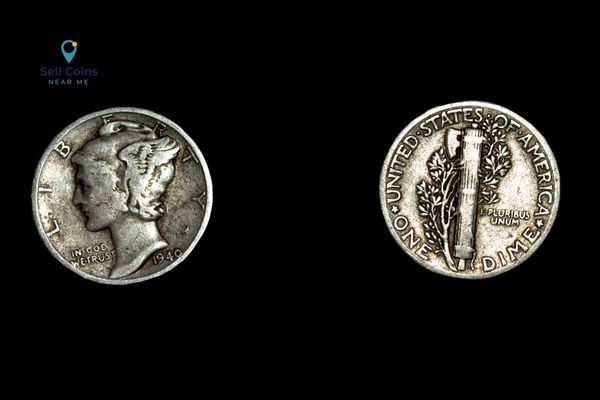
The Mercury dime is one and the same as the Winged Liberty Head dime. The obverse shows Liberty wearing a winged cap. Many people think it shows the Roman god Mercury, which is why the nickname stuck.
The reverse shows a fasces (bundle of rods) with an olive branch. This coinage ran from 1916 to 1945 and was replaced by Roosevelt dimes in 1946. Designer Adolph A. Weinman created a strong, classical coin design that collectors still admire.
Mercury dimes represent just a fraction of valuable coins collectors enjoy adding to their collections. Search our coin database to see if you might own other rare and valuable coins.
Mercury Dime Silver Value and Melt Value Floor
Each dime contains about 0.072 troy ounces of silver. The total composition is 90% silver and 10% copper. That silver content gives a minimum value tied to the bullion market.
Many common, worn coins trade near their melt value when they’ve been circulated heavily. This is your floor, or minimum value, for a coin with no extra collector premium. When silver rises, the melt price rises too.
Mints and Mint Marks
Mercury dimes were struck at three mints:
- Philadelphia (no mint mark)
- Denver (D)
- San Francisco (S)
Look for the mint mark on the reverse, near the bottom, to the left of the fasces. Many dates are common, yet certain year and mint combinations carry higher value.
What Drives Mercury Dime Value
Grade and Eye Appeal
Condition is the main driver of Mercury dime values. Coins grade on a scale that runs from AG3 (About Good) up through MS65+ (Mint State).
Circulated coins show wear on Liberty’s hair, the wings on the cap, and the fasces. Uncirculated examples keep full mint luster and show no wear, only small marks.
Strong eye appeal, including clean surfaces, natural toning, and bright luster, adds to the value of Mercury dimes. A quick visual check is simple with PCGS Photograde.
Full Split Bands (FB) on the Fasces
On the reverse, the fasces has three center bands. When those bands are fully separated, grading services award a Full Split Bands (FB) designation. That mark signals a sharp strike and often a premium look.
FB can turn a valuable Mercury dime into a standout coin, especially in higher grades. Inspect the bands with good light and magnification.
Mercury Dime Key Dates, Varieties, and Errors
Some issues are scarce in any grade. These are often called key date Mercury dimes. Others are rare only in high grades or with FB. The most valuable Mercury dimes often fall into these groups:
- Key dates: 1916-D, 1931-D, and 1931-S
- Major variety: 1942/1 overdate (Philadelphia and Denver)
- Errors and oddities: Clipped planchets, wrong planchet strikes, and dramatic die breaks
Certified coins from PCGS or NGC tend to sell for more, as buyers trust the grade and authenticity.
The 1916-D is the best-known key date Mercury dime. It has a low mintage and a big premium. Counterfeits are common, often with an added “D” mint mark.
Study mint mark shape and placement, the coin’s weight, and the surface. Many collectors choose certification for this date for peace of mind.
The 1942/1 shows the 1 under the 2 in the date. Both the Philadelphia and Denver versions bring high prices, especially in uncirculated and with FB. This is one of the most valuable Mercury dime varieties.
Where To Sell Mercury Dimes
At-Home Appraisal With Coinfully
If you want top-of-market pricing and a clear process, Coinfully is the best choice. Coinfully offers a free review, transparent communication, and fast payment.
You send photos, get a market-leading offer, ship with an insured label, and get paid immediately.
Large collections may qualify for an at-home, in-person appraisal, where a member of their team travels to you to appraise your coins, make an offer, and provide immediate payment.
No pressure and no travel. This is a simple answer to where to sell Mercury dimes when you value time, safety, and a fair coin appraisal. Get your free online coin appraisal today.
Local Coin Dealers and Coin Shows
Local shops and shows give you an in-person option. A dealer can sort your coins on the spot and make an offer the same day. Prices vary by shop and by the mix of coins in your lot.
If you want to visit a nearby seller, see our dealer directory. Bring a list of dates and mints to speed things up.
Auctions and Online Marketplaces
Certified rarities, FB coins, and standout eye appeal pieces can do very well at auction. The trade-offs are seller fees and time.
Online marketplaces reach a wide audience, but risks rise for raw key dates due to counterfeits and shipping losses. Pack with care, use tracking and insurance, and set clear return terms if you choose this route to sell Mercury dimes.
Should You Grade Before You Sell Mercury Dimes?
When Certification Adds Value
PCGS or NGC grading can raise the selling price for standout coins. Good candidates include:
- Coins worth about $150 or more in raw condition.
- Uncirculated or near-uncirculated pieces with strong luster.
- FB candidates and top eye appeal coins.
- Key dates such as the 1916-D and the 1942/1 overdate.
Fees and time vary, so weigh the costs against the likely premium. We can advise on which coins to slab for the best net result.
When Raw Sale Suffices
Many common, circulated silver coins sell near melt value. In those cases, a raw sale is simple and cost-effective. Bagged lots of common dates often trade as bullion.
Spotting Counterfeits on Key Dates
For the 1916-D, check:
- Weight: About 2.5 grams; diameter about 17.9 mm
- Mint mark: Correct D shape and position near the bottom left of the fasces
- Surface: Added mint marks often show tool marks or color change
When in doubt, certification removes guesswork and builds buyer confidence.
How Much Do Mercury Dimes Sell For?
Mercury Dime Melt Value and Common Date Ranges
The Mercury dime melt value changes according to the current price of silver. Many heavily worn common dates bring amounts close to the melt value. A few dollars per coin when silver is in a typical range is average. This sets the minimum value for a low-grade piece.
Mid-Grade and Uncirculated Ranges
Better dates in Fine to Extremely Fine condition often fall in the $4.50–$70 range. Mid-grade and choice pieces can reach $100–$1,000.
Premium uncirculated examples can bring $1,000 and higher, and FB coins increase from there. Eye appeal and strike quality move the needle fast.
Key Date Premiums
Key date Mercury dimes and major varieties lead the market. A 1916-D or a 1942/1 with strong grade and FB can sell for many thousands. A handful of elite coins in top grade have realized more than $200,000.
Prep Checklist To Protect Value Before Selling Mercury Dimes
Sort by Date and Mint Mark
Group your dimes by year and mint. Flag possible key dates: 1916-D, 1931-D, 1931-S, and the 1942/1 overdate. Keep potential FB coins separate so the bands can be checked with care. Get a professional coin appraisal so you’ll understand the true value of your collection.
Do Not Clean Your Coins
Cleaning causes hairline scratches, removes the natural patina, and lowers value. Leave original surfaces alone. Even light wiping can cut the price. Natural toning is fine. Buyers prefer undisturbed surfaces on Winged Liberty Head dimes.
Photograph and Pack With Care
Use soft holders such as 2×2 flips or tubes. Photograph the obverse, reverse, the fasces bands, and the mint mark under good light. Careful packing protects rims and surfaces in transit when selling a coin collection.
Ready To Sell Mercury Dimes With Confidence?
Before you sell your coins, know your floor from the Mercury dime silver value, and then look for grade, eye appeal, and FB. Watch for key dates such as the 1942/1 variety. Pick the venue that fits your goals. Certification pays off for standout pieces.
Coinfully brings top-of-market pricing, a simple at-home appraisal, and fast, transparent payments. We care about your collection and are here to help you make the best decision for your coins.
Ready to sell your Mercury dimes or other silver coins? Get the highest price for your coins without leaving home. Contact us today to learn how to get a market-leading offer now.